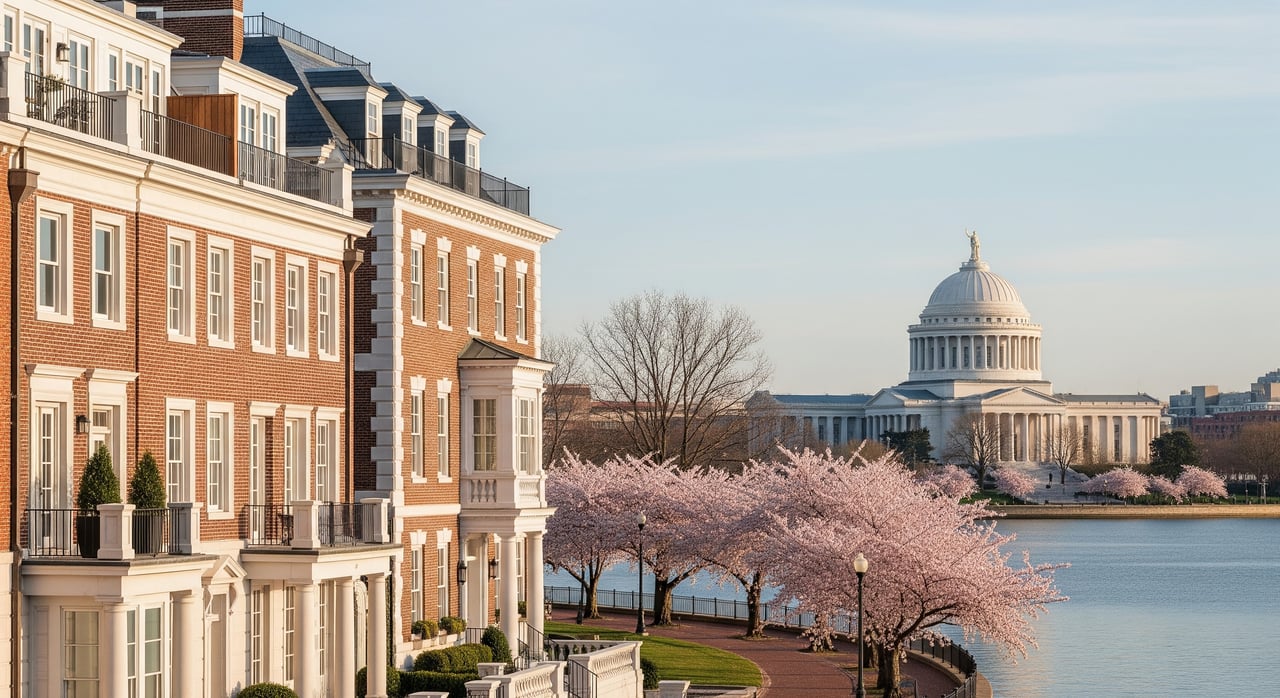
What would it feel like to step from your lobby onto a riverfront promenade, or watch the sunset from your terrace over the Potomac? If you are drawn to water, walkability and a refined urban vibe, Georgetown’s waterfront condo scene might be your perfect fit. Still, every building and block feels a little different, and the right choice depends on how you plan to live. In this guide, you’ll learn where the true waterfront is, how the main condo buildings compare, what daily life looks like, and the key due diligence steps that protect your investment. Let’s dive in.
What counts as the waterfront
Georgetown’s river edge centers on the promenade and parkland that stretch from roughly 31st Street NW to Key Bridge. The public heart of it is Georgetown Waterfront Park, a sequence of wide walkways, river steps, plantings and a seasonal fountain designed for easy access to the water’s edge. Explore the park’s features on the National Park Service page for Georgetown Waterfront Park.
At the middle of the action, Washington Harbour lines K Street NW with riverfront restaurants, a large fountain that converts to an ice rink in winter, and direct connections to the promenade. It is the neighborhood’s iconic mixed-use hub and a front-row amenity for many residents. See dining and events on the Washington Harbour site.
Condo styles you’ll see
You will find a mix of modern glass-and-steel residences, classic brick mid-rises, and hotel-branded luxury options. Here is how the headline buildings tend to feel and function.
Modern glass and deck living
3303 Water Street sets the tone for contemporary waterfront design. Expect loft-like layouts, large windows oriented to the canal or Potomac, and standout rooftop amenities, including a pool and sundeck. The building also offers fitness facilities and full-service conveniences. Get a design overview from 3303 Water Street.
Classic brick mid-rises with terraces
Buildings like The Flour Mill offer a traditional brick aesthetic with angled architecture and larger private terraces on many units. These properties often provide concierge-style services and garage parking but may have a leaner amenity package than newer, resort-style towers. If generous private outdoor space matters more to you than a long amenity list, this category is worth a close look.
Mixed-use over the promenade
Select residences within Washington Harbour blend direct access to riverfront dining with building-level services like concierge, fitness and a rooftop pool. Many units feature private balconies or terraces. This option suits buyers who want to feel plugged into the waterfront scene the moment they step outside.
Hotel-level service convenience
For a high-service, lock-and-leave lifestyle, the Residences at The Ritz-Carlton, Georgetown offer 24/7 concierge, valet and hotel-adjacent amenities. Homes range from efficient one-bedrooms to expansive penthouses. Explore services at the Residences at The Ritz-Carlton, Georgetown.
Ultra-luxury, limited supply
The newest wave of branded residences has brought trophy-level product and pricing to the river’s edge. The Four Seasons Private Residences, for example, have been reported to achieve record per-square-foot pricing in the D.C. market. See coverage that the Four Seasons Private Residences posted record per-square-foot sales.
Daily life: dining and recreation
Living here puts you steps from destination dining. Washington Harbour is home to headline restaurants and weekend energy, with seasonal programming that includes the rink in winter and outdoor events in warmer months. Review restaurants and happenings on the Washington Harbour site.
If you prefer an active river routine, you can launch kayaks and paddleboards from boathouses near Key Bridge and Thompson Boat Center. The C&O Canal towpath starts in Georgetown and is a favorite for morning runs and bike rides. Check official paddling guidance and access points on the National Park Service page for C&O Canal boating.
Getting around and access
Georgetown does not have a Metro station within the neighborhood. Most waterfront addresses sit about a 10 to 20 minute walk from Foggy Bottom–GWU Station, depending on your route. Many residents rely on buses, the Circulator, bikes and ride-share for daily travel. For drivers, the Key Bridge and Whitehurst Freeway offer quick river crossings and access to city arterials. See transportation guidance on the Georgetown BID’s neighborhood page.
What it costs to live here
Waterfront living in Georgetown commands premium pricing. Inventory on the true river’s edge is limited, and a few ultra-luxury sales can shift building-level averages. Branded, hotel-adjacent residences typically carry higher monthly fees to support concierge, valet and expanded amenities. If you value full-service convenience and lock-and-leave ease, it is often worth the higher HOA commitment. If you prioritize outdoor space and lower fees, classic mid-rises with terraces can be more efficient on monthly costs.
For accurate pricing, you will want very recent, building-specific comps. Unit orientation, terrace size, view corridor and renovation level all move the needle.
Key tradeoffs to weigh
- Proximity to the promenade and restaurants brings lively energy. If you prefer quieter evenings, consider a courtyard-facing or upper-floor home.
- Lack of an in-neighborhood Metro is offset by walkability, cycling routes and ride-share coverage. Test your commute at peak times.
- Garage parking and storage vary by building. Confirm deeded spaces, fees and guest parking rules before you fall in love with a unit.
- Flood risk is a real planning item for riverfront addresses. Review maps and insurance needs early in your search.
- Georgetown’s historic district rules affect visible exterior changes. If you plan roof or façade work, factor in review timelines.
Smart due diligence checklist
Use this short list to protect your purchase and avoid surprises.
- Pull the property’s FEMA determination on the FEMA Flood Map Service Center; review scenarios in the NOAA Sea Level Rise Viewer.
- Request the HOA package: bylaws, recent meeting minutes, reserve study, and three years of budgets. Confirm any special assessments or capital plans.
- Verify deeded or assigned parking and storage. Ask about guest parking procedures and any monthly fees.
- Assess unit orientation for potential noise from restaurants or plazas. Ask about sound-mitigating windows and building construction.
- If exterior work is on your wish list, confirm review requirements using the Old Georgetown Board FAQs.
- Ask management about any boating privileges, nearby slip options, and rules for storing small watercraft.
How to choose the right building
Start with your non-negotiables. If you want rooftop amenities and a modern aesthetic, 3303 Water Street and similar contemporary buildings fit the bill. If you want larger terraces and a classic brick look, buildings like the Flour Mill are strong candidates. If you need concierge and valet with true lock-and-leave convenience, hotel-branded residences such as the Ritz-Carlton deliver that experience. Finally, keep an eye on limited ultra-luxury opportunities that can set neighborhood benchmarks.
Walk the promenade at different times of day. Listen for ambient noise and pay attention to foot traffic patterns. Time how long it takes you to get to the towpath, your favorite restaurants and your commute route. Small details like elevator speed, lobby staffing and garage access will matter in daily life.
Ready to tour on the water’s edge or compare floor plans and fees across buildings? Reach out to Hugh McDermott for calm, expert guidance tailored to your goals.
FAQs
Are there boat slips with Georgetown waterfront condos?
- Private slips are limited and not standard with every building. Ask management about docking options, nearby boathouses and storage rules for small watercraft.
Do Georgetown waterfront buyers need flood insurance?
- If a lender sees the home in a FEMA special flood hazard area, coverage is typically required. Many buyers purchase flood insurance on tidal riverfronts as a precaution.
How noisy is living near Washington Harbour?
- The promenade and plazas create a lively atmosphere at peak times. Choose an interior or upper-floor orientation if you prefer a quieter setting.
Is there a Metro station in Georgetown?
- No. The nearest heavy-rail stop is Foggy Bottom–GWU, often a 10 to 20 minute walk from many waterfront addresses. Buses, bikes and ride-share fill the gap.
What amenities are typical in waterfront condos?
- Expect staffed lobbies or concierge, fitness centers and outdoor spaces. Rooftop pools, valet and guest suites are more common in newer or hotel-branded properties.
How competitive is inventory on the waterfront?
- Supply on the true riverfront is tight and can be influenced by a few trophy sales. Building-level comps and recent activity are essential for pricing and strategy.